







Rubber Roller Making Machine Manufacturer
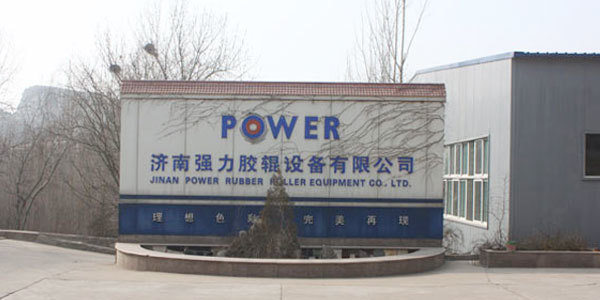
Jinan Power Roller Equipment Co., Ltd.
Rubber Roller Equipment: Importance, Versatility, and Technological Advancements
Release time:
2026-10-30


Introduction
Rubber roller equipment is an essential component in various industries, offering a range of applications that contribute to smooth production processes. From printing and packaging to papermaking, textiles, plastics, and material handling, rubber rollers play a critical role in guiding, pressing, conveying, and finishing materials. With advancements in technology, these devices have evolved to provide enhanced functionality and efficiency. This article will explore the importance, versatility, and advancements in rubber roller equipment across different fields.
Rubber roller equipment include: Rubber Roller Covering Machine, Rubber Roller Multi-purpose Stripping Machine, Rubber Roller CNC Grinding Machine, Rubber Roller Vulcanizer, Rubber Roller Polishing Machine, Open Mixer Mill, Internal Mixer, etc.
The Importance of Rubber Roller Equipment
Rubber rollers are widely used in production lines where reliable contact, uniform pressure, and consistent surface quality are required. Their performance directly affects product quality, machine uptime, and operational efficiency. As a result, the equipment used to manufacture, repair, and recondition rubber rollers is just as important as the rollers themselves.
Rubber roller equipment supports the complete lifecycle of a roller—from rubber compounding and covering to vulcanization, grinding, polishing, and stripping. This allows manufacturers and maintenance teams to produce new rollers, restore worn rollers, and maintain consistent dimensional accuracy and surface finish. In industries where continuous production is critical, having the right rubber roller equipment can reduce downtime, extend roller service life, and lower overall operating costs.
A Versatile Equipment Portfolio
Rubber roller equipment covers a broad range of machines designed for different stages of roller production and refurbishment.
Rubber Roller Covering Machine
This equipment is used to apply rubber compound onto a roller core. It helps ensure uniform thickness and good adhesion between the rubber cover and the metal core, which are essential for roller durability and performance.
Rubber Roller Multi-purpose Stripping Machine
The stripping machine removes old rubber, adhesive, and surface layers from used roller cores. By preparing cores efficiently for re-covering, it supports refurbishment and helps reduce material waste.
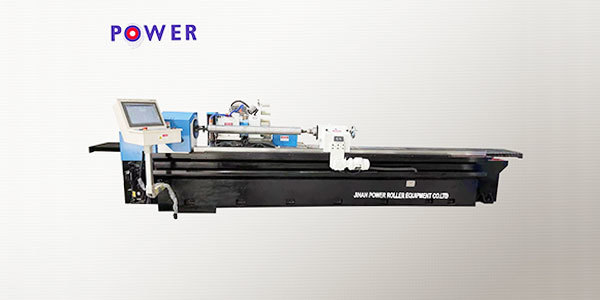
Rubber Roller CNC Grinding Machine
CNC grinding machines are used to grind rubber rollers to precise dimensions and surface profiles. Computer numerical control improves accuracy, repeatability, and efficiency, making this equipment suitable for high-quality roller production and repair.
Rubber Roller Vulcanizer
Vulcanization is a key process that gives rubber its strength, elasticity, and durability. Rubber roller vulcanizers provide controlled heat and pressure to cure the rubber cover, helping achieve consistent physical properties and reliable bonding.
Rubber Roller Polishing Machine
Polishing equipment is used to refine the roller surface after grinding. It helps achieve the required smoothness, uniformity, and surface quality for applications where precise contact and material handling are important.
Open Mixer Mill and Internal Mixer
These machines are used in rubber compounding. The open mixer mill and internal mixer prepare rubber compounds with controlled consistency, which is fundamental to producing rollers with the desired hardness, strength, and processing performance.
Additional auxiliary equipment may also be used for handling, inspection, cleaning, and quality control, depending on the specific roller type and production requirements.
Versatility Across Industries
The versatility of rubber roller equipment is reflected in its wide range of applications. In the printing and packaging industry, rubber rollers are used for ink transfer, film handling, and pressure control. In papermaking and textiles, they help guide and press materials during continuous processing. In plastics, metallurgy, and conveying systems, rubber rollers contribute to stable material handling and surface protection.
Because different industries require different rubber compounds, hardness levels, surface finishes, and dimensional tolerances, rubber roller equipment must be adaptable. Machines such as CNC grinding systems, vulcanizers, and polishing machines can be configured to meet specific roller specifications, allowing manufacturers to serve diverse markets with one integrated equipment portfolio.
Advancements Driving Efficiency and Quality
Technological advancements have significantly improved rubber roller equipment. CNC control, automated feeding systems, improved temperature and pressure control, and better safety features have made roller production and refurbishment more precise and efficient. Modern grinding and polishing equipment can achieve tighter tolerances and more consistent surface quality, while advanced vulcanization systems help ensure uniform curing.
Environmental and safety considerations are also shaping equipment design. Reduced smoke, improved dust collection, safer operation, and more efficient energy use are increasingly important. These improvements help manufacturers meet quality standards while supporting cleaner and safer production environments.
Conclusion
Rubber roller equipment is fundamental to the efficient production, maintenance, and refurbishment of rubber rollers used across many industries. From covering and stripping to vulcanizing, CNC grinding, polishing, and rubber compounding, each machine plays a specific role in ensuring roller quality and production reliability. As technology continues to advance, rubber roller equipment will become more precise, automated, and environmentally responsible, helping industries maintain smooth production processes and high product quality.
RELATED INFORMATION
